Air Jordan Sneakers Face-Off: High-Top vs Low-Top Models
Selecting between high-top and low-top Air Jordan shoes is one of the most frequent decisions encountered by shoe collectors in 2026. Both silhouettes carry decades of hoops legacy and streetwear credibility, yet they fulfill distinctly different functions on and off the court. High-top Jordans marked Michael Jordan’s career, offering the ankle support that allowed him command the NBA through six championship-winning runs. Low-tops, on the other hand, became a fashion-oriented alternative that focuses on freedom of movement and seasonal flexibility. Learning the true differences between these two formats can help you avoid buyer’s remorse and allow you to construct a more balanced sneaker lineup. In this analysis, we explore performance, wearability, fashion, and value so you can form a well-educated decision on your following pair of Air Jordans.
The History Behind Both Silhouettes
When Peter Moore designed the debut Air Jordan 1 in 1985, the high-top build was the unquestioned go-to for basketball footwear. The elevated collar enclosed Michael Jordan’s joint and turned into an legendary aesthetic detail that Nike marketed aggressively during the “Banned” marketing campaign. It was not until the Air Jordan 11 Low debuted in 1996 that Jordan Brand truly explored the low-cut design for a flagship model. That drop showed that fans would adopt a shortened version of an fan-favorite shoe, clearing the path for low-cut versions of nearly every mainline Jordan. By the mid-2000s, low-top Jordans had turned into a summer staple, regularly going out of stock alongside their high-top counterparts. Today in 2026, Jordan Brand puts out about similar quantities of high-top and low-top colorways each quarter, reflecting symmetrical consumer demand across both formats.
Ankle Support and On-Court Performance
High-top Air Jordans rise 2 to 3 inches above the ankle bone, establishing a secure collar that restricts sideways rolling during explosive cuts, pivots, and jumps. Shoes like the Air Jordan 1 High and Air Jordan 12 feature foam-padded collars combined with rigid heel cups to secure the entire foot during game situations. According to a 2024 report published in the British Journal of Sports Medicine, high-top basketball footwear decreased the occurrence of sprained ankles by approximately 28 percent compared to low-cut alternatives Jordan retro sneakers in amateur players. Low-top Jordans, such as the Jordan 1 Low and Jordan 11 Low, give up some of that stability in return for reduced weight — often cutting 50 to 80 grams per shoe. For casual ballers who compete in pick-up games once or twice a week, that lighter build means faster first steps and less fatigue over prolonged play. The sacrifice is tangible, though: if you have a track record of ankle sprains, a high-top shoe with correct lacing continues to be the wiser pick for any basketball play.
How Comfortable Is Each Cut for All-Day Wear
Away from the hardwood, ease needs change significantly, and low-top Air Jordans commonly come out ahead. The lower collar height does away with the irritation that high-cut Jordans can produce against the Achilles tendon during extended walking. Many users say that low-top Jordans feel broken in after just two or three uses, while high-top models may require five to seven wears before the ankle cushioning fully conforms. Sole technology continues to be consistent across both heights — the Air Jordan 1 uses the same Air sole unit no matter the height, and the Jordan 11 retains its full-length Air unit in both iterations. Warmth is another practical factor: low-tops permit considerably better breathability around the ankle area, making them the ideal choice for warm seasons when overheating becomes an factor. For fall and winter or long days on your feet, the warmth provided by a high-top collar can actually be an advantage, trapping warmth contained around the ankle area.
Style and Outfit Versatility
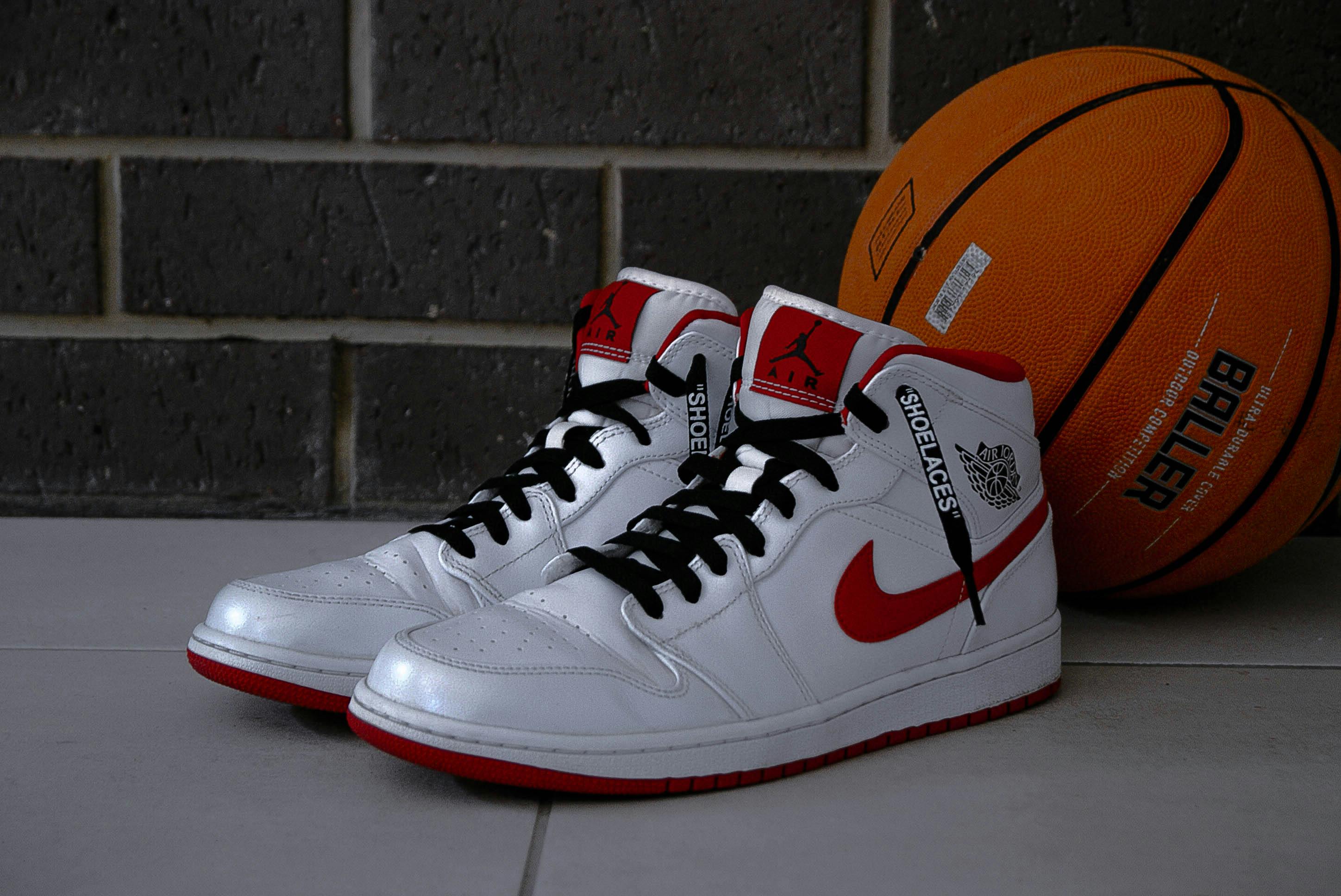
From a style point of view, high-top Air Jordans command interest and function as a statement piece in any ensemble. The Air Jordan 1 High, in colorways like Chicago, Bred, and Royal, consistently sits among the most snapped sneakers on social media platforms, producing millions of hashtag mentions on Instagram alone. High-cut Jordans complement slim-fit or tapered trousers, track pants, and athletic shorts that let the full design to be shown off — burying a high-top under loose jeans defeats its visual purpose. Low-cut Jordans, on the other hand, deliver a more streamlined silhouette that pairs smoothly with a larger selection of fits, including straight-leg jeans, chinos, and even dressed-up trousers. Style-conscious sneakerheads in 2026 regularly style Jordan Lows as a transitional shoe that links streetwear and business-casual settings. The versatility factor offers low-cut models a marginal edge for consumers who are looking for a single pair to address various settings throughout the week.
Color and Material Considerations
High-top Air Jordans commonly offer more surface area, which lets designers to incorporate complex color blocking and opposing materials across the upper. This extra real estate is why legendary editions like the Jordan 1 High “Union LA” and “Travis Scott” collaborations seem so design-dense — there is literally more canvas to utilize. Low-tops shrink that same design approach into a reduced canvas, which can either appear more refined or feel visually cramped depending on the colorway. Leather, nubuck, suede, and patent leather all feature across both constructions, though premium materials often appear more often in high-top special editions. In terms of longevity, the additional material on a high-top means a bit more coverage against scratches around the ankle region. Collectors prioritizing keeping their Jordans flawless for years regularly gravitate toward taller versions for this real-world reason alone.
High-Top vs Low-Top: Direct Comparison
| Feature | High-Top Air Jordans | Low-Top Air Jordans |
|---|---|---|
| Ankle Support | Superior — extends past the ankle | Minimal — sits below ankle |
| Weight per Shoe | 400–500 g per shoe | 340–420 g per shoe |
| Optimal Season | Fall / Winter | Spring / Summer |
| Fashion Versatility | Streetwear, sporty | Streetwear, casual, smart-casual |
| Break-In Time | 5–7 wears | 2–3 wears |
| Aftermarket Value | Typically stronger | Middling |
| Ventilation | Average | Superior |
| Standard Retail Price | $170–$200 | $130–$170 |
Resale Value and Collectibility
In the resale market, high-top Air Jordans have consistently attracted steeper markups than their shorter versions. Data from StockX reveals that the Air Jordan 1 High OG posts a 40 to 60 percent markup over retail in in-demand releases, while the Jordan 1 Low OG usually shows a 15 to 30 percent markup. Limited-edition high-tops, especially those linked to collabs with creatives like Virgil Abloh or Travis Scott, have hit secondary market prices above $2,000 in mint condition. Jordan Lows are beginning to bridge that divide, however, as Jordan Brand invests more heavily in dedicated low-top launches geared toward lifestyle consumers. The Travis Scott x Air Jordan 1 Low Reverse Mocha, for example, commanded significantly above $1,500 on secondary markets throughout 2023 and 2024. For buyers focused on long-range returns, high-top models continue to be the more reliable choice, but the low-top market is evolving quickly and deserves attention.
Which One Should You Pick?
Your decision at the end of the day is determined by how and where you expect to wear your Air Jordans. If on-court performance is a priority — even at a pick-up level — the support benefits of a high-top are hard to ignore, and the added ankle support can stop sprains that would bench you for weeks. For casual everyday styling across different environments, a low-top Air Jordan provides unrivaled versatility, lighter weight, and an faster break-in experience that slots seamlessly into a hectic lifestyle. Value-minded consumers will also welcome that low-cut models typically are priced $20 to $40 below their high-top counterparts, stretching your footwear budget additionally. Ideally, a diverse rotation has at least one of each: a high-top for making a statement and fall and winter, and a low-top for casual spring and summer styling. Evaluate your current wardrobe, assess your physical activity, and think about your climate before deciding. Whichever cut you pick, you are purchasing a silhouette built on over 40 years of sneaker innovation from Jordan Brand.
The Final Word
The high-top versus low-top conversation has no definitive answer because both constructions shine in distinct scenarios. High-top Air Jordans deliver superior ankle support, more impressive resale markups, and a more striking aesthetic impact that owns streetwear photography and sneaker conventions. Low-top Air Jordans fire back with a lighter build, quicker break-in times, more expansive fashion versatility, and a more approachable entry price for new enthusiasts. In 2026, Jordan Brand keeps on push boundaries across both formats, launching new cushioning systems and sustainable materials that elevate both choices year over year. The wisest move is to judge each drop on its own merits rather than enforcing a blanket preference for one cut over the other. Whether you strap on a high-top pair for a weekend convention or step into a low-top pair for a backyard BBQ, the Jumpman logo on your foot carries the same legendary weight.